Leather
Woody
Top Notesbergamotblack teamandarinvetiver
Heartapricotcarrot seedscassiagaiac / guaiac wood
Base Notescedarwoodincensemate teapine tar
Tags
#sexy
Style
unisex
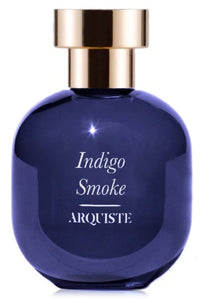

Evoking the traditional smoking of tea leaves in ancient China, Indigo Smoke is an aromatic landscape of narrow serpentine rivers, blue mountains and incense-filled temples condensed into a complex formula of black tea, woody notes and incense. Rich, sophisticated and long-lasting. With notes of lapsang souchong tea, mandarin orange, apricot, guaiac wood, incense and pine tar.
All about this fragrance
Vibe check
An unhurried conversation after the tea has steeped, with the dry scent of smoke still caught in a wool sleeve. Indigo Smoke suits that close, attentive register: dark tea and resinous woods give it gravity, while apricot keeps the atmosphere intimate rather than austere.
How to wear
Its rich tea, woods and incense suit cooler weather, when the smoky texture can feel enveloping rather than heavy. Start with one or two sprays on skin and let the fruit soften the darker accords as it settles. In warmer conditions, apply lightly; the composition is described as long-lasting, so allow time before topping up.
Who it’s for
For those drawn to lapsang souchong, incense and resinous woods, especially when smoke is softened by fruit rather than pushed into a stark, burnt effect. It will appeal to tastes that favour textured, quietly sensual fragrances over bright citrus or overt sweetness.
Release year
2022
The nose
Calice Becker is known for compositions that combine clarity with richness, from the luminous floral structure of Dior J’adore to her extensive work for Kilian. Her range spans transparent florals, textured woods and enveloping gourmand accords. For Indigo Smoke, she brings smoky tea, fruit and incense into a nuanced landscape rather than a single-note smoke effect.
Collaborators
Carlos Huber developed Indigo Smoke’s creative concept with Calice Becker. As Arquiste’s founder and creative director, he shaped the historical setting in the Wuyi Mountains and the connection between smoked tea, woodland fires and temple incense.
Arquiste’s story
Arquiste translates historical places and moments into fragrance, drawing on founder Carlos Huber’s background in architecture and historic preservation. Research and storytelling provide the framework; materials, atmosphere and spatial detail become the means of making the past tangible through scent.
Indigo Smoke’s concept
Arquiste places Indigo Smoke’s narrative in May 1646 in China’s Wuyi Mountains. The brand’s origin tale describes monks fleeing Qing soldiers and saving harvested tea by smoking it over pinewood fires. This historical inspiration—not a verified account of lapsang souchong’s invention—becomes a composition of smoked tea, mountain air and incense from nearby shrines.
Extra info
Indigo Smoke received a Coup de cœur distinction in Clara Muller’s 2023 review for Auparfum/Nez. Its published note lists also vary between launch coverage and the current brand page; those differences do not establish that the fragrance was reformulated.
Featured in edits and sample packs
Time For Tea
Top Notesbergamotblack teamandarinvetiver
Heartapricotcarrot seedscassiagaiac / guaiac wood
Base Notescedarwoodincensemate teapine tar
Tags
#sexy
Style
unisex
Evoking the traditional smoking of tea leaves in ancient China, Indigo Smoke is an aromatic landscape of narrow serpentine rivers, blue mountains and incense-filled temples condensed into a complex formula of black tea, woody notes and incense. Rich, sophisticated and long-lasting. With notes of lapsang souchong tea, mandarin orange, apricot, guaiac wood, incense and pine tar.
All about this fragrance
Vibe check
An unhurried conversation after the tea has steeped, with the dry scent of smoke still caught in a wool sleeve. Indigo Smoke suits that close, attentive register: dark tea and resinous woods give it gravity, while apricot keeps the atmosphere intimate rather than austere.
How to wear
Its rich tea, woods and incense suit cooler weather, when the smoky texture can feel enveloping rather than heavy. Start with one or two sprays on skin and let the fruit soften the darker accords as it settles. In warmer conditions, apply lightly; the composition is described as long-lasting, so allow time before topping up.
Who it’s for
For those drawn to lapsang souchong, incense and resinous woods, especially when smoke is softened by fruit rather than pushed into a stark, burnt effect. It will appeal to tastes that favour textured, quietly sensual fragrances over bright citrus or overt sweetness.
Release year
2022
The nose
Calice Becker is known for compositions that combine clarity with richness, from the luminous floral structure of Dior J’adore to her extensive work for Kilian. Her range spans transparent florals, textured woods and enveloping gourmand accords. For Indigo Smoke, she brings smoky tea, fruit and incense into a nuanced landscape rather than a single-note smoke effect.
Collaborators
Carlos Huber developed Indigo Smoke’s creative concept with Calice Becker. As Arquiste’s founder and creative director, he shaped the historical setting in the Wuyi Mountains and the connection between smoked tea, woodland fires and temple incense.
Arquiste’s story
Arquiste translates historical places and moments into fragrance, drawing on founder Carlos Huber’s background in architecture and historic preservation. Research and storytelling provide the framework; materials, atmosphere and spatial detail become the means of making the past tangible through scent.
Indigo Smoke’s concept
Arquiste places Indigo Smoke’s narrative in May 1646 in China’s Wuyi Mountains. The brand’s origin tale describes monks fleeing Qing soldiers and saving harvested tea by smoking it over pinewood fires. This historical inspiration—not a verified account of lapsang souchong’s invention—becomes a composition of smoked tea, mountain air and incense from nearby shrines.
Extra info
Indigo Smoke received a Coup de cœur distinction in Clara Muller’s 2023 review for Auparfum/Nez. Its published note lists also vary between launch coverage and the current brand page; those differences do not establish that the fragrance was reformulated.
Featured in edits and sample packs
Time For Tea