Edible
Leather
Notesalmondcastoreumgingerhinokijasminekorean bbqmatchapear ice creamricesandalwoodtobacco
Tags
#smoky
#sweet
Style
unisex
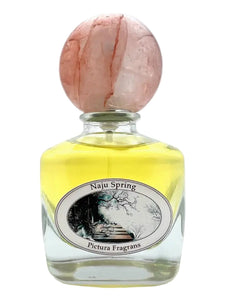
A perfume inspired by a spring picnic in Naju, South Korea, known for its pears, lush forests and blossoming Buddhist gardens. The opening of matcha tea, pear ice cream, ginger and almond evokes a picnic on pagoda steps. Delving deeper, jasmine, hinoki wood and toasted rice envelop the senses. Woolly castoreum and a meaty accord of goji gui offer a surprisingly savoury drydown.
Stone Cap: 100% rose quartz
All about this fragrance
Vibe check
An unhurried afternoon with tea poured from a flask and something still warm from the grill: Naju Spring holds sweetness and smoke in the same frame. Its woodland heart and leathery finish give the picnic mood an earthy edge rather than a confectionery gloss.
How to wear
Try it in mild spring weather or cooler autumn air, when its tea, woods and savoury warmth can sit comfortably together. Start with one or two sprays of the 25% extrait on skin and allow the drydown to develop before adding more; use a lighter hand in heat.
Who it’s for
For those who enjoy edible fragrances beyond vanilla and sugar: matcha, rice and pear ice cream meet smoky meat and animalic leather. It suits a taste for narrative compositions, unusual savoury accords and sweetness tempered by woods.
Release year
2024
The nose
DL Jenkins is Pictura Fragrans’ founder and sole perfumer. His creative process begins with a written story shaped by memory and emotion, before materials are chosen to build its atmosphere. In Naju Spring, that narrative approach brings tea, ice cream, woodland and Korean barbecue into one composition.
Pictura Fragrans’s story
Pictura Fragrans approaches perfume as a painting made through scent, combining artistry, sensory perception and science. Its concept of an “Olfactive Setting” gives the wearer an aromatic environment to interpret through their own memories and cultural associations, rather than prescribing a single emotional response.
Naju Spring’s concept
Naju Spring imagines a sunlit picnic on pagoda steps in Naju, South Korea, surrounded by forests and flowering Buddhist gardens. Matcha, pear ice cream and toasted rice establish the picnic, while hinoki and jasmine sketch the landscape. A Korean-barbecue accord and castoreum give the scene a savoury, animalic conclusion.
Extra info
The bottle has a cap made from 100% rose quartz. The official note pyramid includes Korean BBQ alongside castoreum and sandalwood, giving its picnic concept a distinctly savoury base.
Also featured in
Japanese Elegance
Notesalmondcastoreumgingerhinokijasminekorean bbqmatchapear ice creamricesandalwoodtobacco
Tags
#smoky
#sweet
Style
unisex
A perfume inspired by a spring picnic in Naju, South Korea, known for its pears, lush forests and blossoming Buddhist gardens. The opening of matcha tea, pear ice cream, ginger and almond evokes a picnic on pagoda steps. Delving deeper, jasmine, hinoki wood and toasted rice envelop the senses. Woolly castoreum and a meaty accord of goji gui offer a surprisingly savoury drydown.
Stone Cap: 100% rose quartz
All about this fragrance
Vibe check
An unhurried afternoon with tea poured from a flask and something still warm from the grill: Naju Spring holds sweetness and smoke in the same frame. Its woodland heart and leathery finish give the picnic mood an earthy edge rather than a confectionery gloss.
How to wear
Try it in mild spring weather or cooler autumn air, when its tea, woods and savoury warmth can sit comfortably together. Start with one or two sprays of the 25% extrait on skin and allow the drydown to develop before adding more; use a lighter hand in heat.
Who it’s for
For those who enjoy edible fragrances beyond vanilla and sugar: matcha, rice and pear ice cream meet smoky meat and animalic leather. It suits a taste for narrative compositions, unusual savoury accords and sweetness tempered by woods.
Release year
2024
The nose
DL Jenkins is Pictura Fragrans’ founder and sole perfumer. His creative process begins with a written story shaped by memory and emotion, before materials are chosen to build its atmosphere. In Naju Spring, that narrative approach brings tea, ice cream, woodland and Korean barbecue into one composition.
Pictura Fragrans’s story
Pictura Fragrans approaches perfume as a painting made through scent, combining artistry, sensory perception and science. Its concept of an “Olfactive Setting” gives the wearer an aromatic environment to interpret through their own memories and cultural associations, rather than prescribing a single emotional response.
Naju Spring’s concept
Naju Spring imagines a sunlit picnic on pagoda steps in Naju, South Korea, surrounded by forests and flowering Buddhist gardens. Matcha, pear ice cream and toasted rice establish the picnic, while hinoki and jasmine sketch the landscape. A Korean-barbecue accord and castoreum give the scene a savoury, animalic conclusion.
Extra info
The bottle has a cap made from 100% rose quartz. The official note pyramid includes Korean BBQ alongside castoreum and sandalwood, giving its picnic concept a distinctly savoury base.
Also featured in
Japanese Elegance