Fruity
Vintage/old school
Woody
Notesamberanimalic notesfecal nuancefigfig tree fruitfig tree leaveshoneyindolejasminelactonic nuancemace spicemusconemyrrhmysore sandalwoodnettlesplumsandalwoodtokaji winewineyogurt
Tags
#animalic
#fresh
Style
unisex
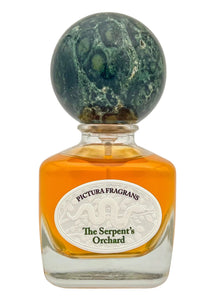
In a garden long unguarded, where fig trees ripen past reason and the perfume of crushed blooms rises from the warm ground, Eve returns to Eden, empowered. The Serpent’s Orchard is a heady surge of wine and rose, honey and myrrh, jasmine and sandalwood. Look out for the snake among the figs.
Stone Cap: 100% peacock quartz
All about this fragrance
Vibe check
This is a scent for an unhurried afternoon that turns intimate: conversation draws closer as green fig leaf gives way to wine-rich fruit, honey and animalic flowers. Its presence is abundant rather than restrained, with an old-world sensuality that suits expressive dress and a relaxed social tempo.
How to wear
Try it first in mild or cool weather, when the milky fig, honey and resin are less likely to feel overwhelming. Begin with one or two sprays on skin and let the extrait settle before adding more. In warmer conditions, use a lighter application to keep the green foliage in balance with the ripe, animalic richness.
Who it’s for
For those drawn to ripe fig rather than crisp fruit, indolic jasmine rather than pristine florals, and honeyed warmth with an animalic edge. Its green nettle, lactonic texture and woody-resinous base will appeal to lovers of dense, vintage-leaning compositions with an unusual gourmand dimension.
Release year
2025
The nose
DL Jenkins is Pictura Fragrans’ founder and sole perfumer. His approach begins with a written story shaped by emotion and memory, with materials chosen to translate that narrative into scent. In The Serpent’s Orchard, this method takes the form of an overgrown Eden, expressed through ripe fruit, green foliage, heady flowers and animalic warmth.
Pictura Fragrans’s story
Pictura Fragrans approaches perfume as a painting composed through scent. Its narrative-led creations connect art, science and sensory perception, leaving room for the wearer’s memories and surroundings to complete the work. The house presents fragrance as sensory art rather than therapy or medicine.
The Serpent’s Orchard’s concept
The Serpent’s Orchard reimagines Eve returning to an overgrown Eden without shame or submission, intent on protecting a threatened world. Its feminist and ecological story unfolds through fermenting fruit, flowers, milk, honey and resin. The fragrance is Part I of Furies of the New Dawn.
Extra info
The fragrance is specified at 22% extrait de parfum and comes in 50 ml and 15 ml formats. Its stone cap is made from 100% peacock quartz. The note list includes Tokaji wine and yogurt alongside fig, nettle and jasmine sambac—details that deepen the orchard’s fermented, milky character.
Notesamberanimalic notesfecal nuancefigfig tree fruitfig tree leaveshoneyindolejasminelactonic nuancemace spicemusconemyrrhmysore sandalwoodnettlesplumsandalwoodtokaji winewineyogurt
Tags
#animalic
#fresh
Style
unisex
In a garden long unguarded, where fig trees ripen past reason and the perfume of crushed blooms rises from the warm ground, Eve returns to Eden, empowered. The Serpent’s Orchard is a heady surge of wine and rose, honey and myrrh, jasmine and sandalwood. Look out for the snake among the figs.
Stone Cap: 100% peacock quartz
All about this fragrance
Vibe check
This is a scent for an unhurried afternoon that turns intimate: conversation draws closer as green fig leaf gives way to wine-rich fruit, honey and animalic flowers. Its presence is abundant rather than restrained, with an old-world sensuality that suits expressive dress and a relaxed social tempo.
How to wear
Try it first in mild or cool weather, when the milky fig, honey and resin are less likely to feel overwhelming. Begin with one or two sprays on skin and let the extrait settle before adding more. In warmer conditions, use a lighter application to keep the green foliage in balance with the ripe, animalic richness.
Who it’s for
For those drawn to ripe fig rather than crisp fruit, indolic jasmine rather than pristine florals, and honeyed warmth with an animalic edge. Its green nettle, lactonic texture and woody-resinous base will appeal to lovers of dense, vintage-leaning compositions with an unusual gourmand dimension.
Release year
2025
The nose
DL Jenkins is Pictura Fragrans’ founder and sole perfumer. His approach begins with a written story shaped by emotion and memory, with materials chosen to translate that narrative into scent. In The Serpent’s Orchard, this method takes the form of an overgrown Eden, expressed through ripe fruit, green foliage, heady flowers and animalic warmth.
Pictura Fragrans’s story
Pictura Fragrans approaches perfume as a painting composed through scent. Its narrative-led creations connect art, science and sensory perception, leaving room for the wearer’s memories and surroundings to complete the work. The house presents fragrance as sensory art rather than therapy or medicine.
The Serpent’s Orchard’s concept
The Serpent’s Orchard reimagines Eve returning to an overgrown Eden without shame or submission, intent on protecting a threatened world. Its feminist and ecological story unfolds through fermenting fruit, flowers, milk, honey and resin. The fragrance is Part I of Furies of the New Dawn.
Extra info
The fragrance is specified at 22% extrait de parfum and comes in 50 ml and 15 ml formats. Its stone cap is made from 100% peacock quartz. The note list includes Tokaji wine and yogurt alongside fig, nettle and jasmine sambac—details that deepen the orchard’s fermented, milky character.