Floral
Fruity
Vintage/old school
Notesambergrisbergamotblack pepperlotusmuskstarfruittiare flowervetiver
Tags
#sexy
Style
unisex
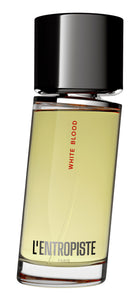
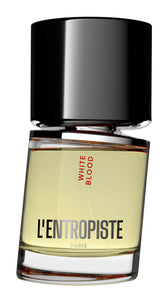
White Blood refers to the pale, living fluid in the stem of a flower. In this case, an imaginary flower with opalescent petals. Seemingly a “nothing” colour, here white reveals itself as the sum of a thousand shades: layered iridescences, light diffracting at every angle. A crisp, appealingly sour opening of starfruit launches into a dense tropical juice of tiaré and watery pink lotus. Like the kaleidoscopic pastels of an opal, a rainbow of scent impressions drift by: is that rose? Ylang-ylang? Kiwi? The enigma continues through the drydown, which stays intriguingly cold and refreshing.
All about this fragrance
Vibe check
White Blood suits the charged pause after an afternoon swim, when conversation resumes at close quarters and warmth still lingers on skin. Tart starfruit keeps the mood alert, while dense tropical flowers bring sensuality without losing the composition’s cool, watery edge.
How to wear
Try it in spring or summer, when its sour fruit and watery flowers can offer a refreshing contrast to warm air. Start with one or two sprays on skin; the lush tiaré merits restraint in close settings. Allow the opening to settle before adding more, so the cool drydown has room to emerge.
Who it’s for
For those drawn to lush tropical florals but less interested in a conventional white-flower bouquet. Its tart starfruit, watery textures and shifting floral impressions suit a taste for sensual fragrances with an abstract, elusive structure.
Release year
2026
The nose
Bertrand Duchaufour is known for compositions that draw complexity from contrasting textures, often combining translucent effects with richly detailed accords. His work includes Timbuktu and Dzongkha for L’Artisan Parfumeur. In White Blood, he makes starfruit the connecting thread between fruit, water and flowers, creating an abstract floral presence rather than a conventionally defined bouquet.
L'Entropiste’s story
L’Entropiste treats perfume as an evolving structure rather than a perfectly balanced object. With Bertrand Duchaufour cast as its “Master of Disorder,” the house uses contrasting materials, tension and deliberate imbalance to arrive at unexpected harmonies.
White Blood’s concept
White Blood imagines the pale sap of a flower with opalescent petals, where white contains a multitude of shifting colors. Conceived as a luminous counterpoint to the smoky, inky darkness of Ensang Noir, it explores continuous transformation between petals and sap, with starfruit linking its watery, fruity and floral dimensions.
Extra info
White Blood entered the collection as L’Entropiste’s eighth fragrance. Despite the floral imagery of its name, starfruit is the composition’s organizing accord, connecting its fruity, watery and floral facets throughout the development.
Notesambergrisbergamotblack pepperlotusmuskstarfruittiare flowervetiver
Tags
#sexy
Style
unisex
White Blood refers to the pale, living fluid in the stem of a flower. In this case, an imaginary flower with opalescent petals. Seemingly a “nothing” colour, here white reveals itself as the sum of a thousand shades: layered iridescences, light diffracting at every angle. A crisp, appealingly sour opening of starfruit launches into a dense tropical juice of tiaré and watery pink lotus. Like the kaleidoscopic pastels of an opal, a rainbow of scent impressions drift by: is that rose? Ylang-ylang? Kiwi? The enigma continues through the drydown, which stays intriguingly cold and refreshing.
All about this fragrance
Vibe check
White Blood suits the charged pause after an afternoon swim, when conversation resumes at close quarters and warmth still lingers on skin. Tart starfruit keeps the mood alert, while dense tropical flowers bring sensuality without losing the composition’s cool, watery edge.
How to wear
Try it in spring or summer, when its sour fruit and watery flowers can offer a refreshing contrast to warm air. Start with one or two sprays on skin; the lush tiaré merits restraint in close settings. Allow the opening to settle before adding more, so the cool drydown has room to emerge.
Who it’s for
For those drawn to lush tropical florals but less interested in a conventional white-flower bouquet. Its tart starfruit, watery textures and shifting floral impressions suit a taste for sensual fragrances with an abstract, elusive structure.
Release year
2026
The nose
Bertrand Duchaufour is known for compositions that draw complexity from contrasting textures, often combining translucent effects with richly detailed accords. His work includes Timbuktu and Dzongkha for L’Artisan Parfumeur. In White Blood, he makes starfruit the connecting thread between fruit, water and flowers, creating an abstract floral presence rather than a conventionally defined bouquet.
L'Entropiste’s story
L’Entropiste treats perfume as an evolving structure rather than a perfectly balanced object. With Bertrand Duchaufour cast as its “Master of Disorder,” the house uses contrasting materials, tension and deliberate imbalance to arrive at unexpected harmonies.
White Blood’s concept
White Blood imagines the pale sap of a flower with opalescent petals, where white contains a multitude of shifting colors. Conceived as a luminous counterpoint to the smoky, inky darkness of Ensang Noir, it explores continuous transformation between petals and sap, with starfruit linking its watery, fruity and floral dimensions.
Extra info
White Blood entered the collection as L’Entropiste’s eighth fragrance. Despite the floral imagery of its name, starfruit is the composition’s organizing accord, connecting its fruity, watery and floral facets throughout the development.